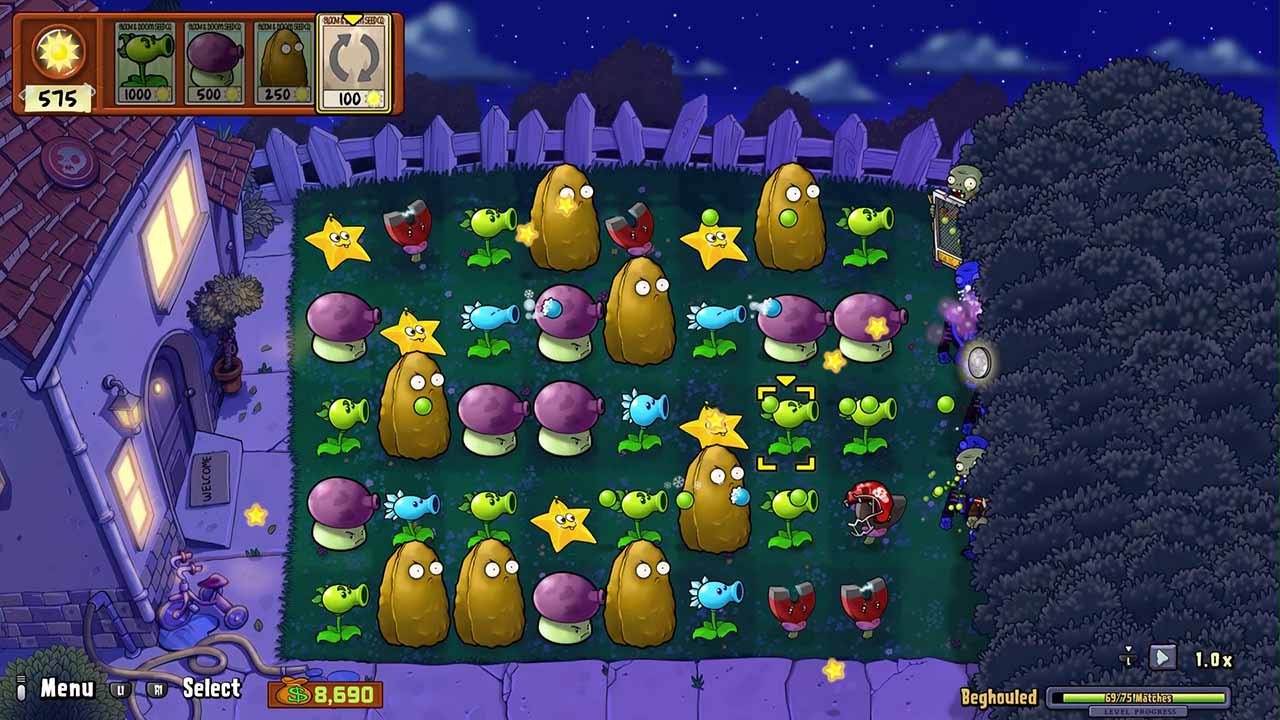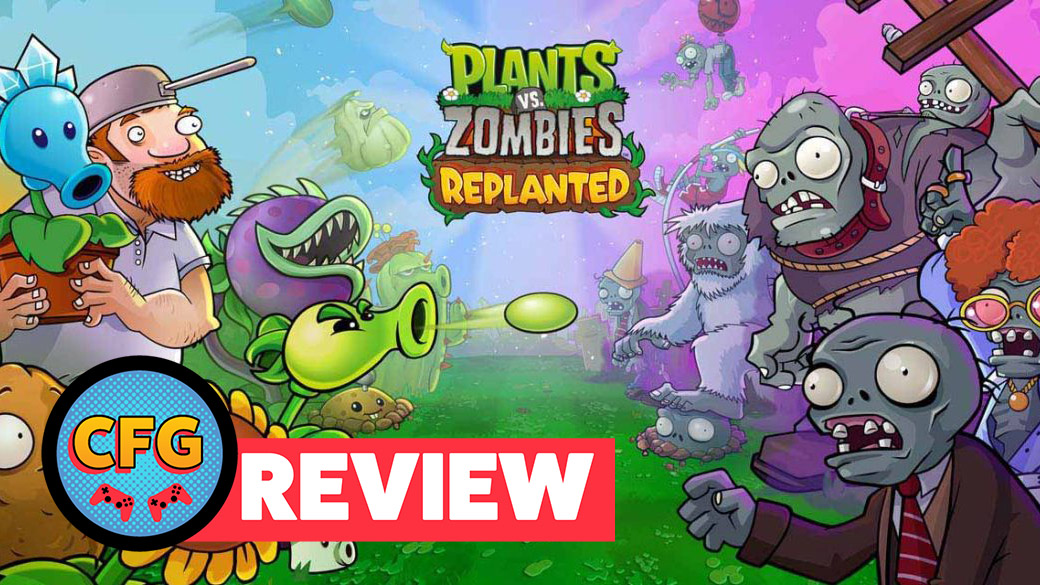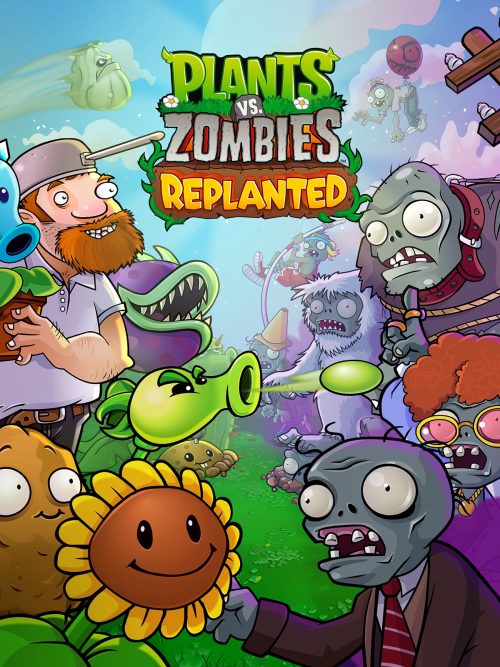
For over sixteen years, Plants vs. Zombies has provided vibrant tower defense thrills. The original 2009 title really grabbed my attention with its extensive Adventure Mode, its unlockable extras, and its substantial variety of units. With its easy to pick up mechanics, wacky premise, iconic visuals, and memorable sound design, it has received numerous ports and inspired numerous sequels and spin-offs over the years. Plants vs. Zombies Replanted returns to the series’ roots by adhering closely to the original game’s structure while adding a handful of its own unique twists. We will specifically address how Plants vs. Zombies holds up 16 years later, how Replanted handles the PlayStation 5’s DualSense controller, and whether or not Replanted’s new modes are engaging.
Adventure Mode’s progression still feels wonderful. It involves balancing resource gathering and planting defenders to ward off waves of zombies. Players pick between peashooters, Wall-Nuts, mushrooms, cacti, and many more. Each of the five worlds has a twist that impacts players’ strategies and each new plant is fun in some way. Players will naturally get into the flow and devise strategies to take out zombies and defend against their tricks. Furthermore, the game’s staggering mode variety and bevy of unlockables are still impressive after all this time. Even though the fifty stage Adventure Mode run may take about six or so hours, there is a ton more to experience between all of the extra mini-games, survival modes, and obtaining all of the optional upgrades.
The audiovisual design still holds up remarkably well. The user interface and backgrounds are full of sizable cartoony elements reminiscent of PopCap’s stylized sensibilities, and the plants and zombies have poignant yet simple animations. The music has a bouncy new age flair that is still quite catchy. Each end-of-world battle song certainly stands out. The sound design is captivating between the zombies’ grunts, their munching sounds, and plants’ popping sounds.
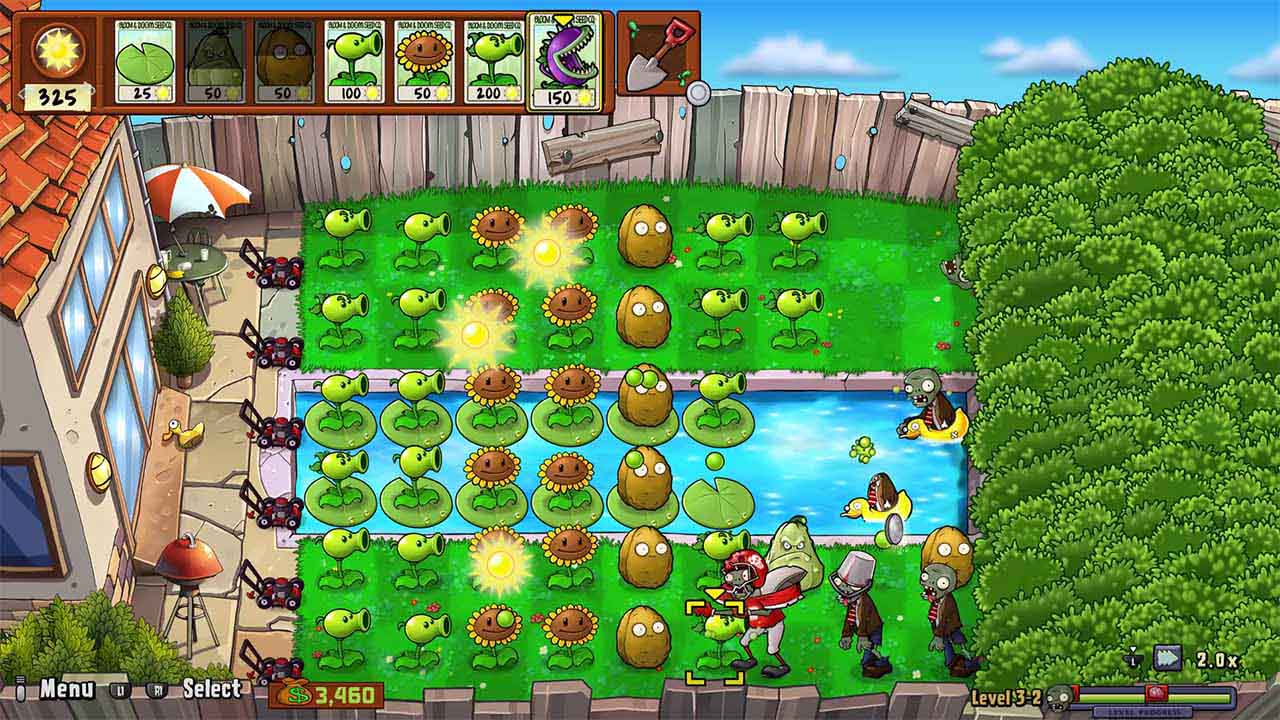
After primarily only having played the original 2009 version, I was curious how the game made the jump to the PlayStation 5’s DualSense controller. The game generally feels quite responsive especially given that this version supports 120 FPS. Players can use the d-pad for grid-based movement or the analog stick for fluid movement. I essentially just used the analog stick, which works well as the cursor automatically picks up nearby sun.
While I cleared Adventure Mode just fine with the DualSense, a few aspects slightly impacted my experience. Occasionally I accidentally planted something in the wrong row while moving the cursor quickly during a zombie wave. This is not a huge issue, but it may demand a bit of extra consideration. A few gimmick stages require players to pick up cards, which sometimes does not always work consistently.
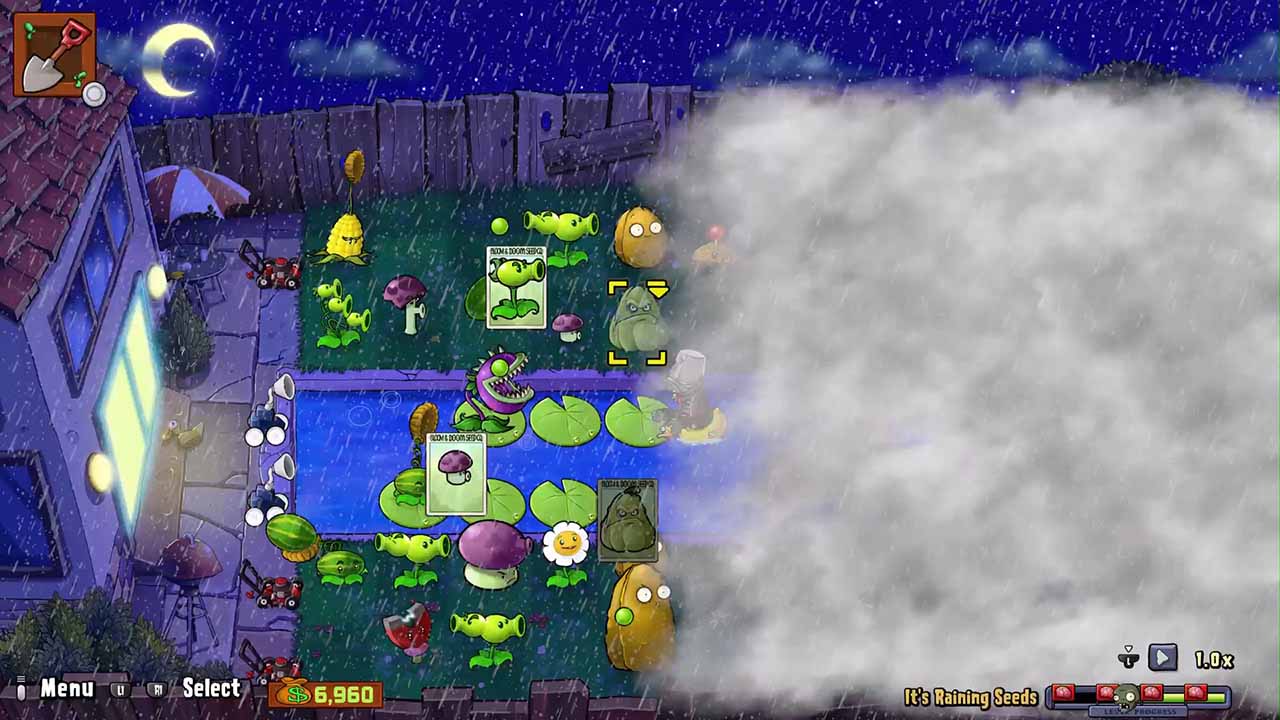
Another major point is that the controls cover all of the necessary bases, but they are not remappable. Speeding up the game is a welcome addition. While pressing L3 speeds up the game, however, I couldn’t find a way to speed the game down. I had to rapidly press L3 which feels a little cumbersome while encountering zombies. I wonder if L2 and R2 could have been mapped to game speed toggles or even adjusting cursor speed, but these buttons are simply unused.
Replanted includes prior console ports’ Versus and Co-op modes. I was not able to extensively test these modes, but they provide opportunities for players to synergize their strategies or battle locally. Splitting the plant slots and having to move cursors to the same spot to gather sun certainly throws a wrench into the mix. Replanted adds Adventure R.I.P., Bonus Levels, and Cloudy Day. After clearing Adventure Mode, players can start Adventure R.I.P., which resets the entire run after a single game over. It only grants a single protective lawnmower as opposed to covering every row. While this mode is not necessarily super overwhelming given that players will inevitably have a full selection of plants, some minigames can still unexpectedly end a run. The new environment palette swaps are neat, but some of the added sound effects are a bit too jarring.
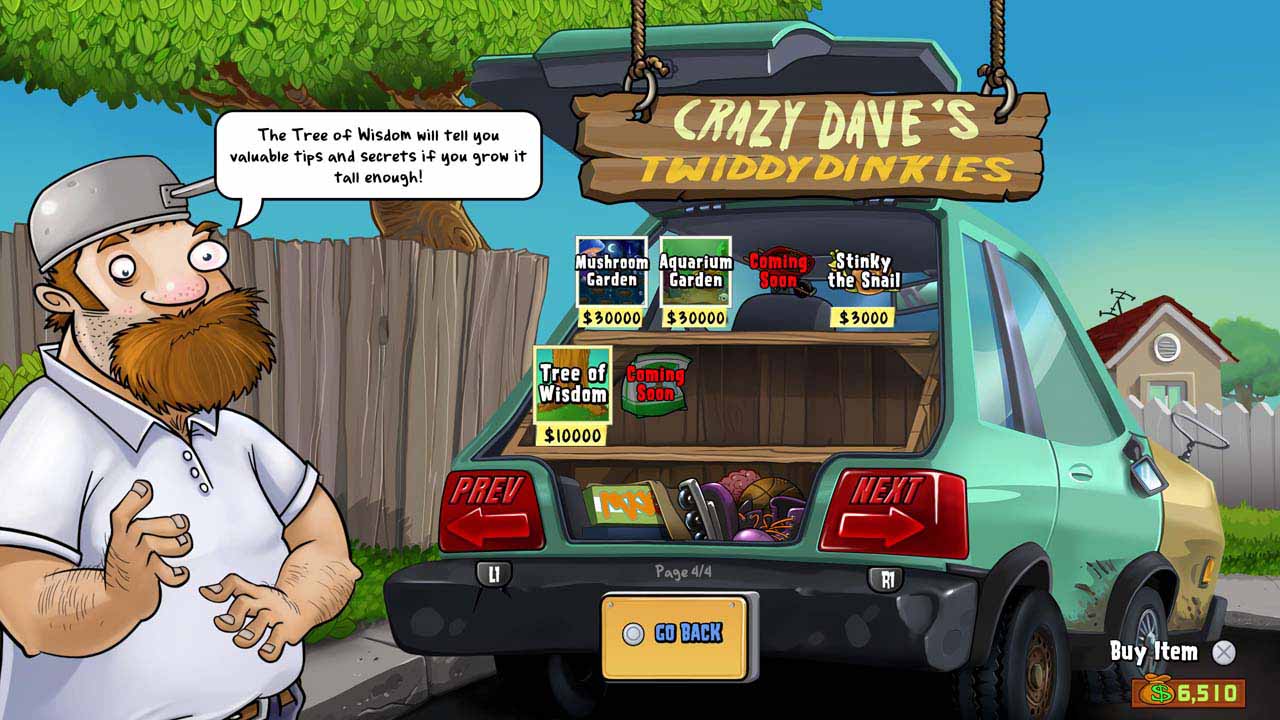

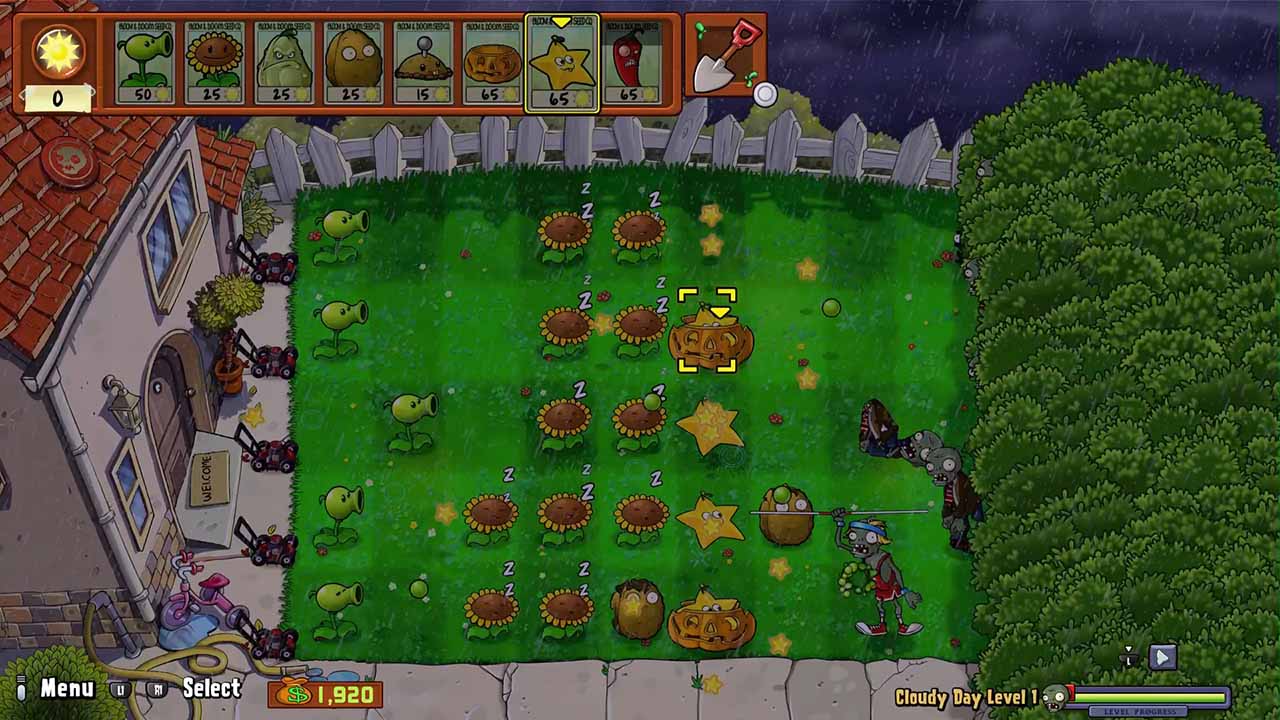
Replanted also features a section for Bonus Levels that feature quirky twists like having a map full of Wall-Nuts or having extra sun. These situations are amusing b-sides, but they perhaps feel more like curiosities and one-off ideas compared to the existing minigames. Cloudy Day consists of a dozen bespoke levels, which add another layer of challenge. Players must grapple with reduced sun gain and mind-bending timed phases. It encourages players to play more patiently, methodically, and strategically as the mode forgives fewer mistakes and will certainly cause players to restart a few times as they strive to nail down their build orders.
A few additional nitpicks include the fact that the game’s options are unchanged from the source material except for new costume toggles. Each stage’s lower right progress bar is perhaps a bit small, so some additional user interface scaling options may have been helpful. The almanac encompassing every plant and zombie is still enjoyable, and it now includes an art gallery that includes sketches and early builds’ screenshots, which is a welcome touch. However, given the game’s stellar music, a music gallery might have been fitting as well.
Plants vs. Zombies: Replanted showcases how the core Plants vs. Zombies experience still holds up well today. The PlayStation 5 DualSense controller implementation is relatively basic and straightforward, but it is sufficient for clearing the game’s modes. The game looks fantastic especially in widescreen and at higher resolutions. Plants vs. Zombies: Replanted is generally a solid way for newcomers or veterans to jump in. However, because it closely follows the footsteps of the original game, Replanted will undoubtedly feel quite familiar to returning players. A sizable portion of the newly added modes are essentially challenge stages, so they may seem like relatively light additions. Nonetheless, Plants vs Zombies: Replanted’s cartoony sensibilities, extensive replayability, and easy to learn mechanics further demonstrate how the game is still appealing sixteen years later.