


Developed by Rayark Games
Published by acttil, PM Studios
Reviewed on Vita (also available on Android and iOS)
Deemo: The Last Recital is a rhythm gaming experience that features easy to learn mechanics and compellingly crafted audiovisual themes. Its simplicity leads to quick bursts of portable rhythm gaming joy on the Vita. Being an enhanced port of Deemo‘s mobile version, The Last Recital has new animated cutscenes and additional material that helps round out the experience.
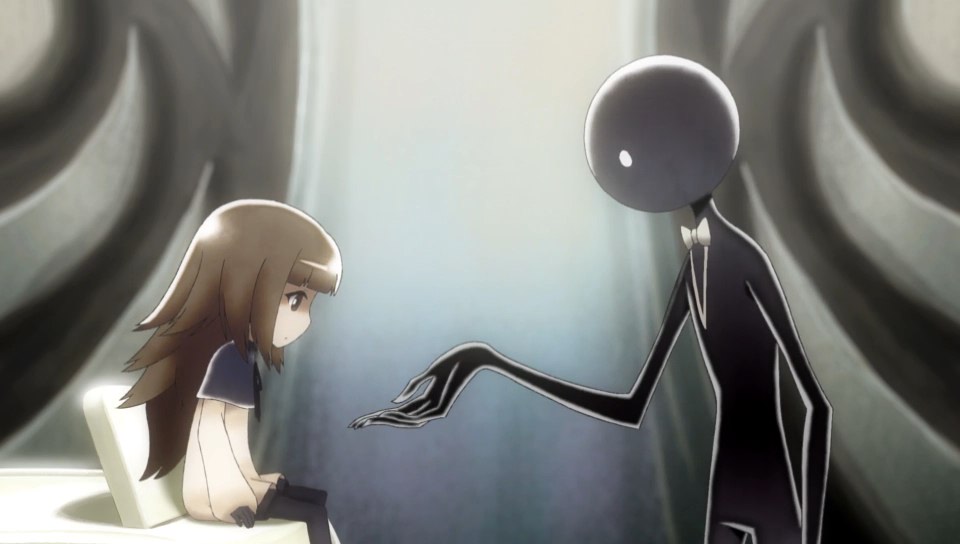 The game’s story takes place in a cavernous fantasy world. After a girl falls into this world from far above, the enigmatic humanoid Deemo ensures her safety and offers to help her learn about the mysteries of the world. By playing music on a magical piano, they spur a magical tree to grow to incredible heights and ascend towards the top of the cavern. Deemo‘s story features enthralling twists as the player discovers more about the universe and the girl’s emotional tragic history.
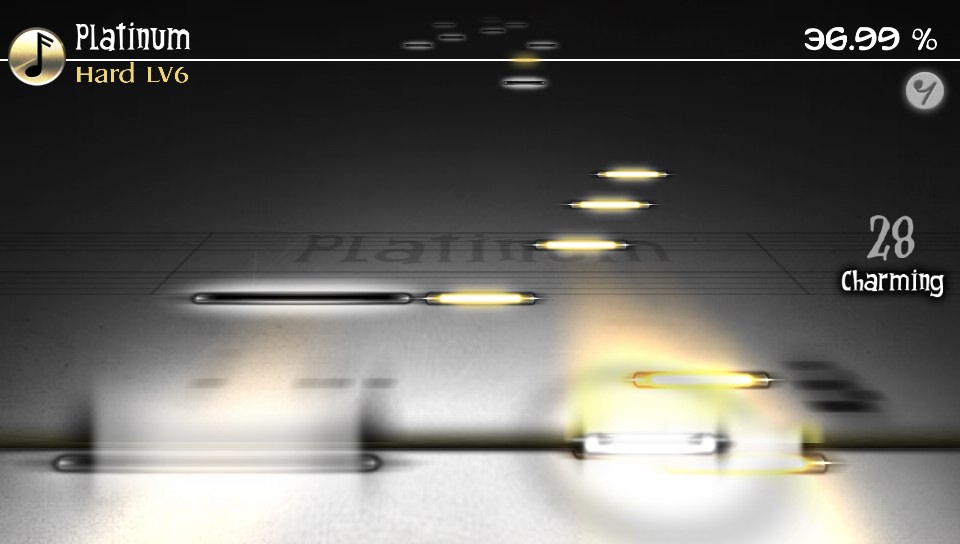 Deemo‘s straightforward mechanics will instantly seem familiar to anyone remotely familiar with rhythm games. The entire game is played using the Vita’s touch screen. Players tap the screen to navigate through menus, choose a song, and tap moving targets. Musical cues descend from the top of the screen towards the target line, and players will either tap or slide their fingers to match the song’s timing. Perfectly timed inputs receive a “Charming” rating. Upon song completion, players can see stats such as their overall completion percentage, their combo, and how many “Charming” hits they achieved. These stats are concisely shown next to each song on the select screen, which helps players know how each song has been cleared.
Despite its origins as a mobile title, the game feels natural on the Vita hardware. Buttons cannot be used at all, but touch gestures work throughout the entire experience. Holding the system upright is generally comfortable while playing songs. Players use two thumbs to hit notes on the target line, which is more than sufficient for most song charts. However, using just two thumbs on harder charts may feel awkward for some players. Overall, the interface suits the Vita’s screen size.
One of Deemo‘s most striking aspects is how the piano motif universally permeates the entire game. Piano key sounds accompany the vast majority of taps, which ties players’ actions to the piano driven narrative. The play field is mostly monochrome which reflects pianos’ black and white motif. The game feels visually cohesive, and a few additional touches help round out the experience. Each song on the select screen is accompanied by a vibrant piece of art that features the Deemo character or the girl in different expressive ways. Sometimes the characters will wear costumes or interact with props in surrealist miniature worlds. The art is stylistically consistent and exciting to see as players unlock new songs.

Deemo‘s unlockable content helps sustain continued play. Players initially can choose from just a handful of songs, but they can gain access to over one hundred tracks. The songs include a vast variety of genres including classical, pop, folk, and even dance music. These tracks include dynamic rock inspired songs like “Nine point eight”, more solemn classical songs such as “Platinum”, and cheerful vocal pop songs including “YUBIKIRI-GENMAN”. As players complete songs, their performance causes the central tree to grow. By clearing songs on each difficulty, achieving full combos, and achieving full “Charming” combos, players can grow the tree more quickly. Players can chart the tree’s growth both by visual changes on the main menu hub as a numerical value. Hitting certain milestones unlocks songs and animated cutscenes. However, the numerical thresholds are not readily apparent, and the process of unlocking new content can sometimes feel arbitrary. Unlocking content still ultimately feels worthwhile as the animation, songs, and imagery feel polished and well crafted.

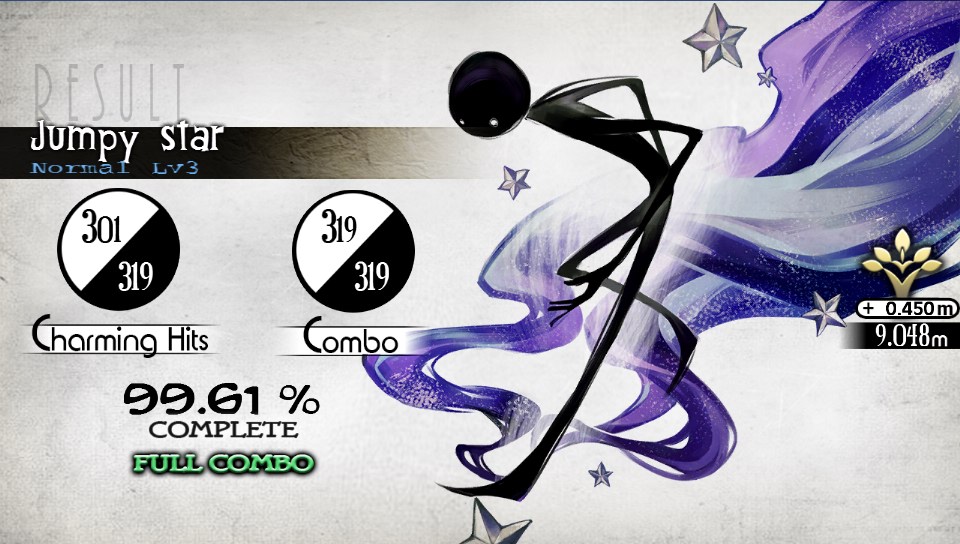 The minimalist play field interface is functional, but it also has a few quirks. The play field consists of brightly outlined icons scrolling on a soft monochrome background, which allows players to easily read incoming cues. Rather than following the common convention of displaying timing text above the target zone, the game shows “Charming!” on the right side of the screen. This text can be hard to see, but this choice keeps the play area simple. On the other hand, targets will glow orange with perfect timing and green with slightly off timing. This choice is visually simple, but it can be hard to see one’s timing amid a flurry of incoming notes.
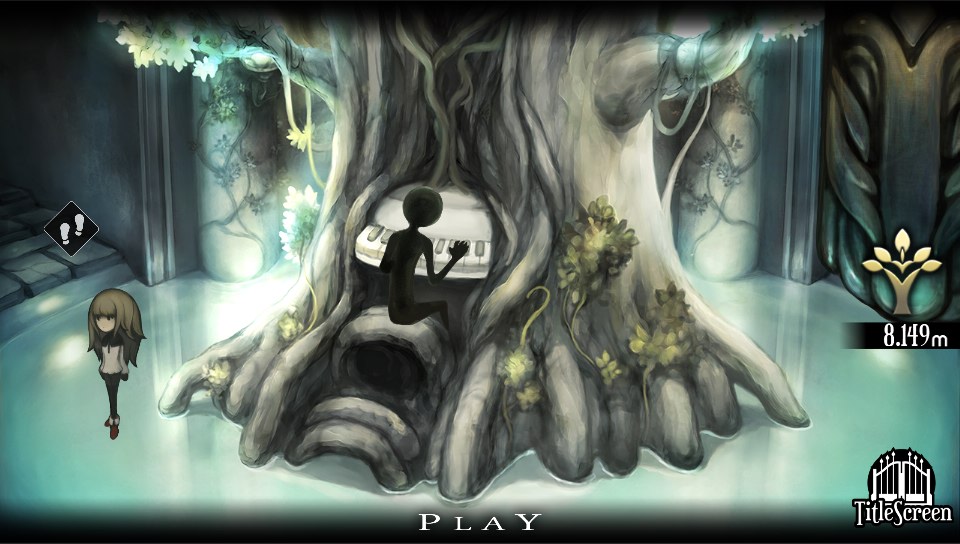 Sometimes navigating the menus can feel like playing an adventure game. Players can navigate through a handful of areas by tapping specific parts of the main hub screen. The rooms are full of targets to tap, and tapping objects will cause the girl to verbally react. At times, however, the areas that players can tap can seem ambiguous. Sometimes tapping everywhere can cause unexpected menus or even events to happen, which provides an amusing sense of discovery.
Deemo: The Last Recital is a worthwhile rhythm gaming experience on the Vita. With new added content and a handful of post game and multiplayer modes, the game has plenty of ways to keep players engaged for hours. The way the game revolves around common themes is fascinating, and the narrative elements are entertaining. It can provide a fun experience for anyone remotely interested in rhythm games.
