


Published by 10tons Ltd.
Reviewed on PlayStation 4 (also available on Nintendo Switch and Steam)
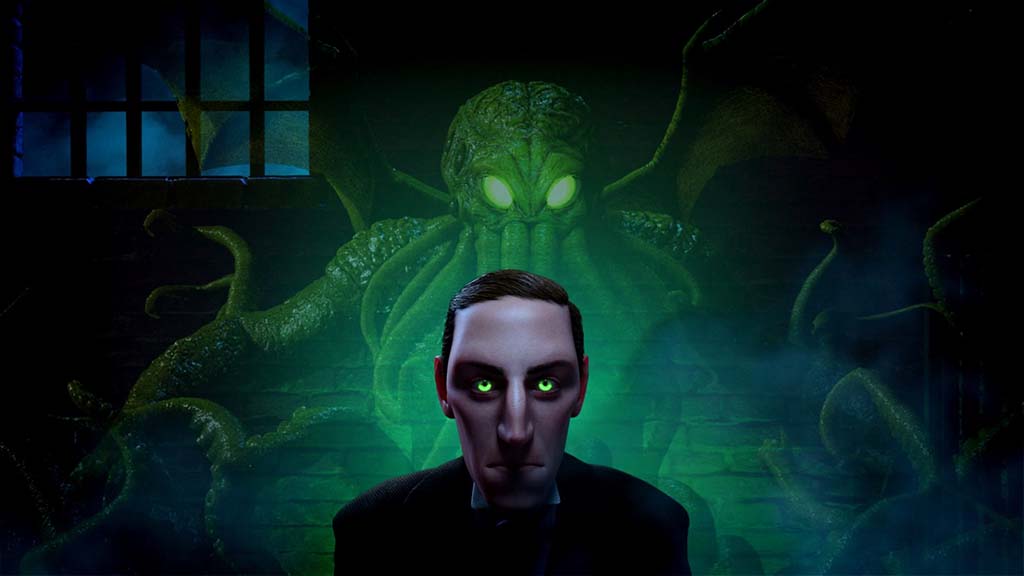
Tesla vs. Lovecraft is a highly stylized take on the classic top-down twin-stick shooter genre. Known for no-frills action games such as Crimsonland and Neon Chrome, 10tons Ltd. has created yet another accessible title that fundamentally resembles classics such as Robotron 2048 and Smash TV. Anyone remotely familiar with twin-stick shooters will be able to jump right into the game and enjoy blasting foes. However, Tesla vs. Lovecraft’s occult-inspired motif is unique among other twin-stick games that feature sci-fi themes and alternate spins on reality. With its oddball presentation, straightforwardness, simple mechanics, and over-the-top abilities, Tesla vs. Lovecraft is a twin-stick shooter worth experiencing. Are you ready to lock and load with Nikola Tesla?
The game’s exposition gives just enough of a reason to blast hordes of enemies. The scientist Nikola Tesla is in the middle of an electrifying presentation when H.P. Lovecraft attempts to intervene. Lovecraft is soon detained, but Tesla subsequently encounters otherworldly horrors. Tesla finds that his lab has been set aflame and that ghastly eldritch beasts have stolen his inventions, which plunges him into a conflict against legions of enemies. While the premise is a bit outlandish, it actually frames the combat and mechanics quite well.
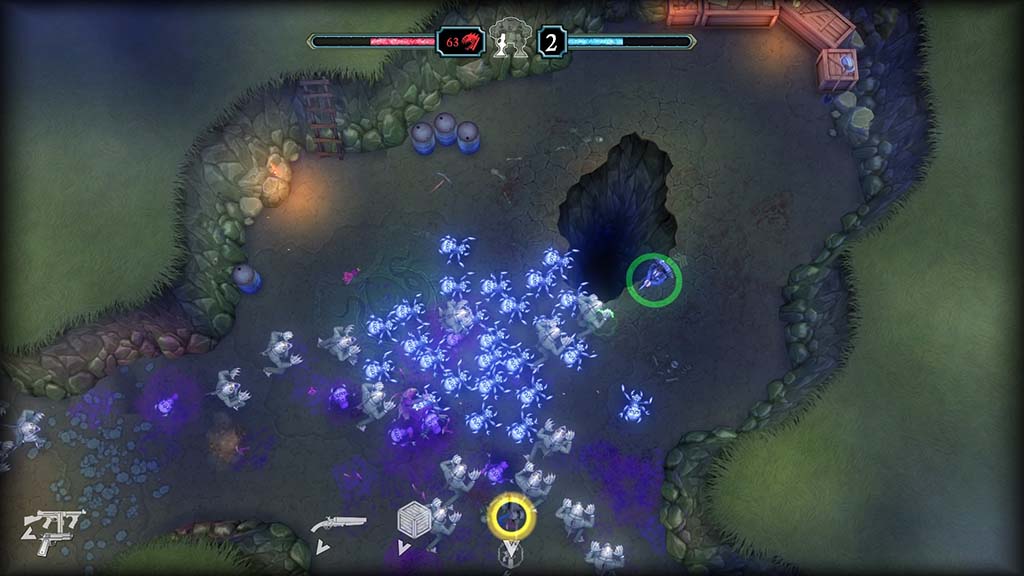
While grounded in an extensive legacy of twin-stick shooters, Tesla vs. Lovecraft shakes up the action with several mechanics. As with any twin-stick shooter, swarms of enemies tirelessly pursue the player. As Tesla, it is up to the player to stay on the move, unleash firepower to decimate foes, and avoid being attacked. Defeating every enemy results in a stage clear, but vigilance is key since occult statues can spawn additional foes onto the map. A notable feature is that Tesla has a teleportation pack that can store three charges. With the ability to teleport on command, Tesla can escape to safety in situations that might seem hopeless. However, the need to wait for the pack to recharge prevents players from being able to abuse teleports. This ability is intuitive, fair, and it helps amplify the pace of combat.
 The game’s perk system grants additional opportunities to trounce the endless hordes of foes, which empowers the player in a straightforward way. Defeating enemies fills an experience bar, and reaching milestones allows the player to choose one of two random perks. These perks include piercing bullets, faster movement, and receiving more supplies. While the system was also present in 10tons Ltd.’d prior shooter Crimsonland, this iteration feels more fair and less chaotic. While perk progression only lasts for a given stage and the game will eventually give repeated choices, the brisk pace of being able to pick perks is still satisfying.
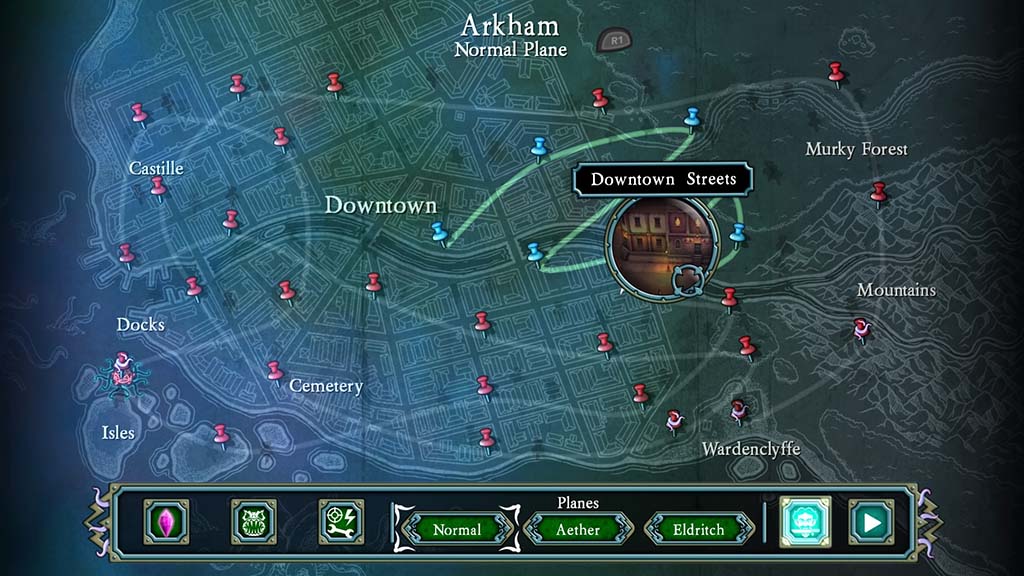
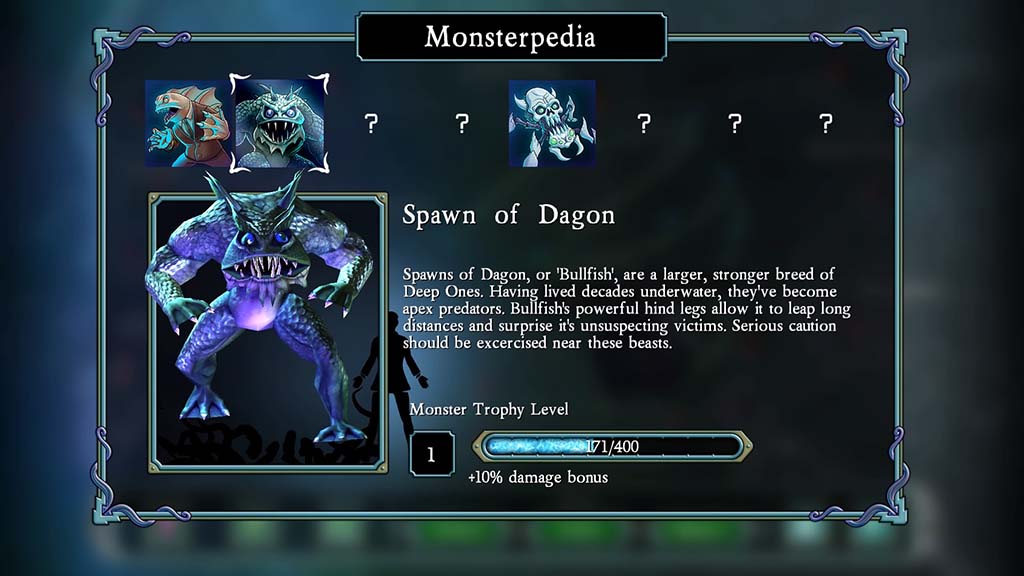 More elements that diversify the action include main weapons, sub weapons, multiple stage layouts, and even a giant mech. By walking over icons on the ground, the player can switch from a pistol to a Tommy Gun and even laser bullets. Other icons grant the player a limited use sub weapon, which includes swords, explosives, and ricocheting disks. These sub weapons can turn the tide of battle in the player’s favor, and they are quite fun to deploy even if they seem nonsensical and arbitrary. In certain circumstances the player can also enter a hulking mech that can unleash wide bullet sprays, which can provide exaggerated fun. The game has dozens of stages that each feature particular layouts, boundaries, and obstacles such as fences and even coffins. Whereas many twin-stick shooters feature a stage with basic rectangular boundaries, Tesla vs. Lovecraft features all sorts of mixed layouts from one stage to the next. Some stages may require moving between houses while others seem more cavernous in nature. The game also gradually introduces new creatures with various tactics and amounts of durability. These features keep the game fresh. Even though they verge on being gimmicky, they provide a satisfying sort of visceral entertainment that stands apart from other twin-stick shooters.
One element that can be hit or miss is the relatively spartan audiovisual experience. The user interface is certainly functional, but the boxy layouts seem a tad basic given the game’s whimsical motif. The cartoony portraits are well crafted, but the lack of animation also creates a bit of a basic look. Furthermore, the creatures, props, and characters can also seem a little simple, but generally they are easy to read on screen. While the use of stark lights creates a foreboding atmosphere in each stage, the spot-like implementation might seem a little dated. The tunes mostly suit the game’s macabre motif, but entering a mech causes the game to play a rather over-the-top industrial track that can be a guilty pleasure.

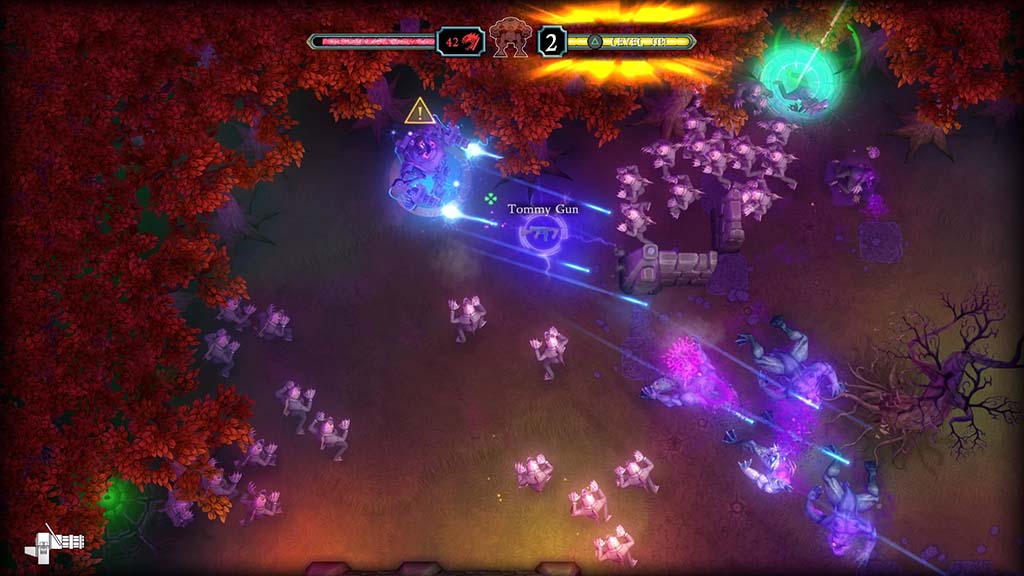
Tesla vs Lovecraft provides plenty of thrills despite revisiting the oft-trodden twin-stick shooter subgenre. With dozens of stages that can each last several minutes, the game can easily fill hours of players’ time with straightforward blasting fun. With its simple visuals, eccentric premise, and over-the-top firepower, the game is an entertaining action-oriented experience that will satisfy anyone seeking some fast-paced action.
