


Developed by Kemco
Published by PQube
Reviewed on Switch (also available on PC)
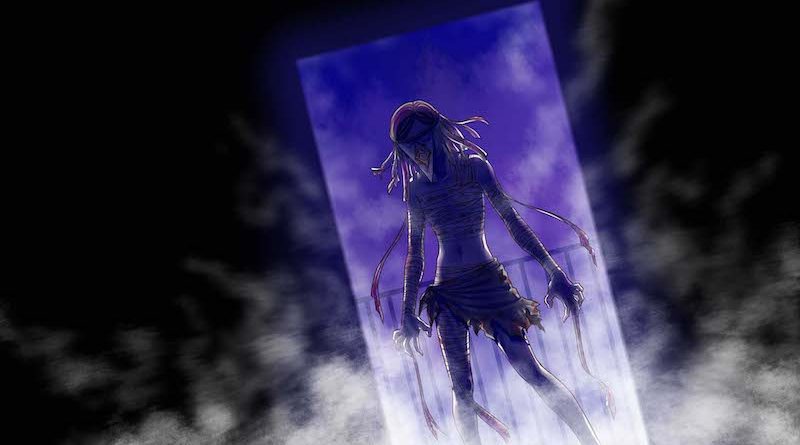 If you’ve read my reviews recently, you know that I like visual novels. What people might not know is I enjoy a good game of Werewolf. If you’re not familiar with the Werewolf, it has a group of the players split into two teams. A majority of the players will be humans, while a few numbers are werewolves. The goal of Werewolf is for either the humans to identify and hang all of the beasts. The other alternative is the werewolves kill all of the humans. It gets pretty intense real quick depending on who you play it with as either side tries to survive until the end. There have not been any hefty narrative games based around Werewolf until the release of Raging Loop.
Raging Loop is a horror visual novel created by Kemco. I was caught totally by surprise with it. It’s currently available on the Switch, PS4, and is set to be released on Steam in December. Just like with most of my VN reviews, I won’t be going into too many plot details to avoid spoilers.
 The player follows Haruaki Fusaishi who after being dumped, decides to take a motorcycle road trip without a destination in mind. After driving for hours and ending up lost, he is directed to a settlement by an angry convenience store clerk. On his way to the store, he crashes his bike and falls into a river. There he bumps into Chiemi Serizawa, who brings him back to a tiny in the poor rural village of Yasumizu. While some of the villagers don’t seem to like outsiders, nothing seems out of the ordinary…until the mist comes. Once the mist comes to Yasumizu, tragedy strikes. The next morning the villagers all gather and the Feast begins.
The general plot and connection to Werewolf are explained to the player even before the game begins as well as some of the other mechanics in the game. Raging Loop features a flow chart system to show how the story is progressing. This comes in super handy later it saves the player a bunch of time. The game even points this out in the beginning by telling the player that they do need multiple saves like in other visual novels. Apart from some general promotional art that reminded me of Nitroplus’ art style, I went into this game blind. So I was taken aback when it was revealed it was based on Werewolf. I was very skeptical because I was unsure how it was going to work. That skepticism quickly fades as the story started going.
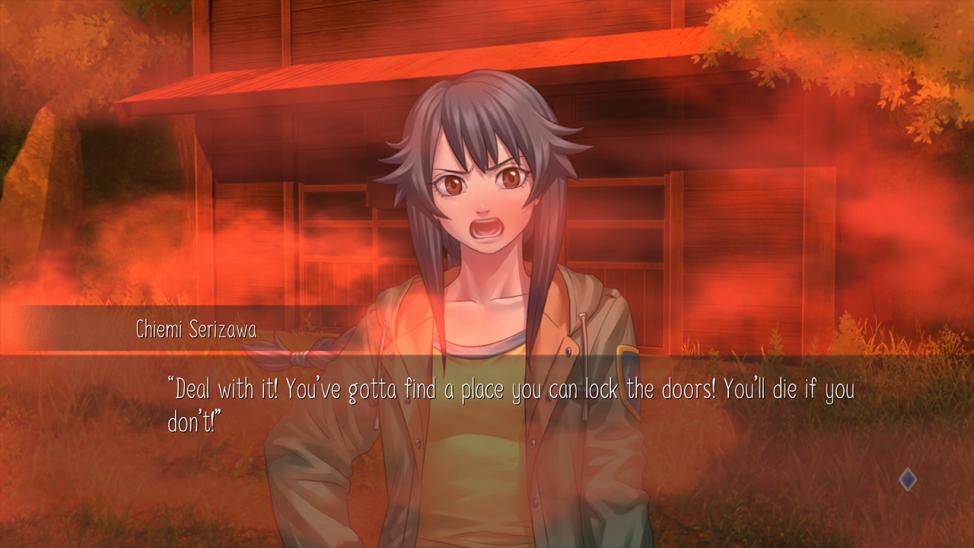 Where Raging Loop shines is the writing and atmosphere that the developers have created. I found myself getting enamored by the back and forth in the feast scenes. The characters’ interactions with each other are all interesting and hit the player when you see their reaction when tragedies strike. While I still had a couple of questions by the end, I was satisfied enough that I was ok not knowing all the answers. Raging Loop sits at around 25-30 hours of gameplay and it never once felt like it was dragging on to me. Even after completing the true ending there are new segments that open up scenes that Haruaki never could have witnessed as well as short side stories.

I believe the flow chart system helps with this as I didn’t have to scroll through previously read text to get to something I’d never seen before. I also have given a special shout out to the translators, there are a lot of small jokes and plot points that have to do with the kanji spellings of some objects and area. Every time that this happens it shows the kanji off to the side just to keep everyone in the loop. Its a small touch but it shows that the translators cared for this project.
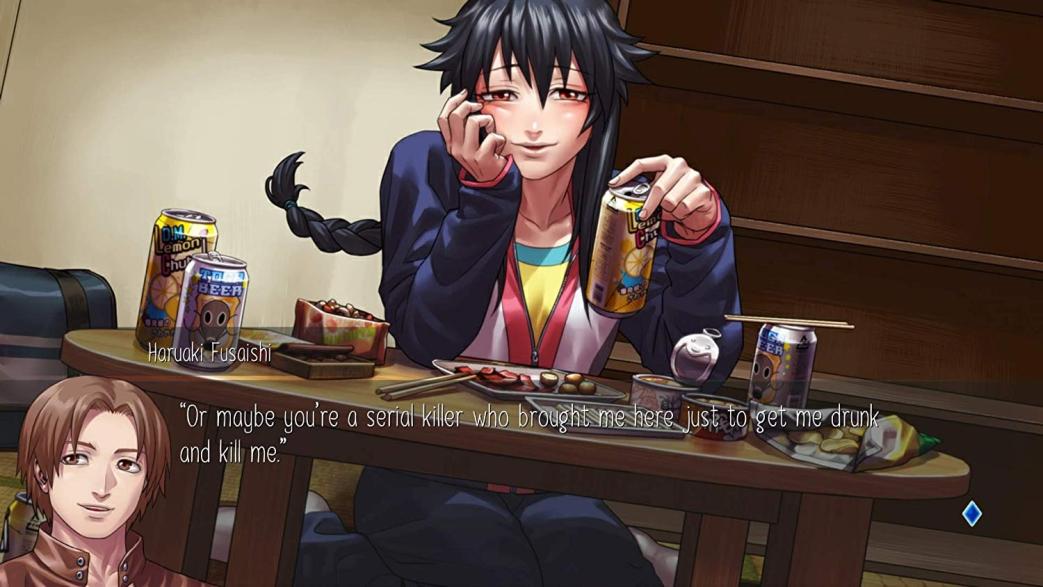 While I was pretty skeptical about how well a visual novel based on Werewolf could turn out, I found myself playing a real hidden gem. Raging Loop is a modern take on a classic game that deserves a readthrough.
